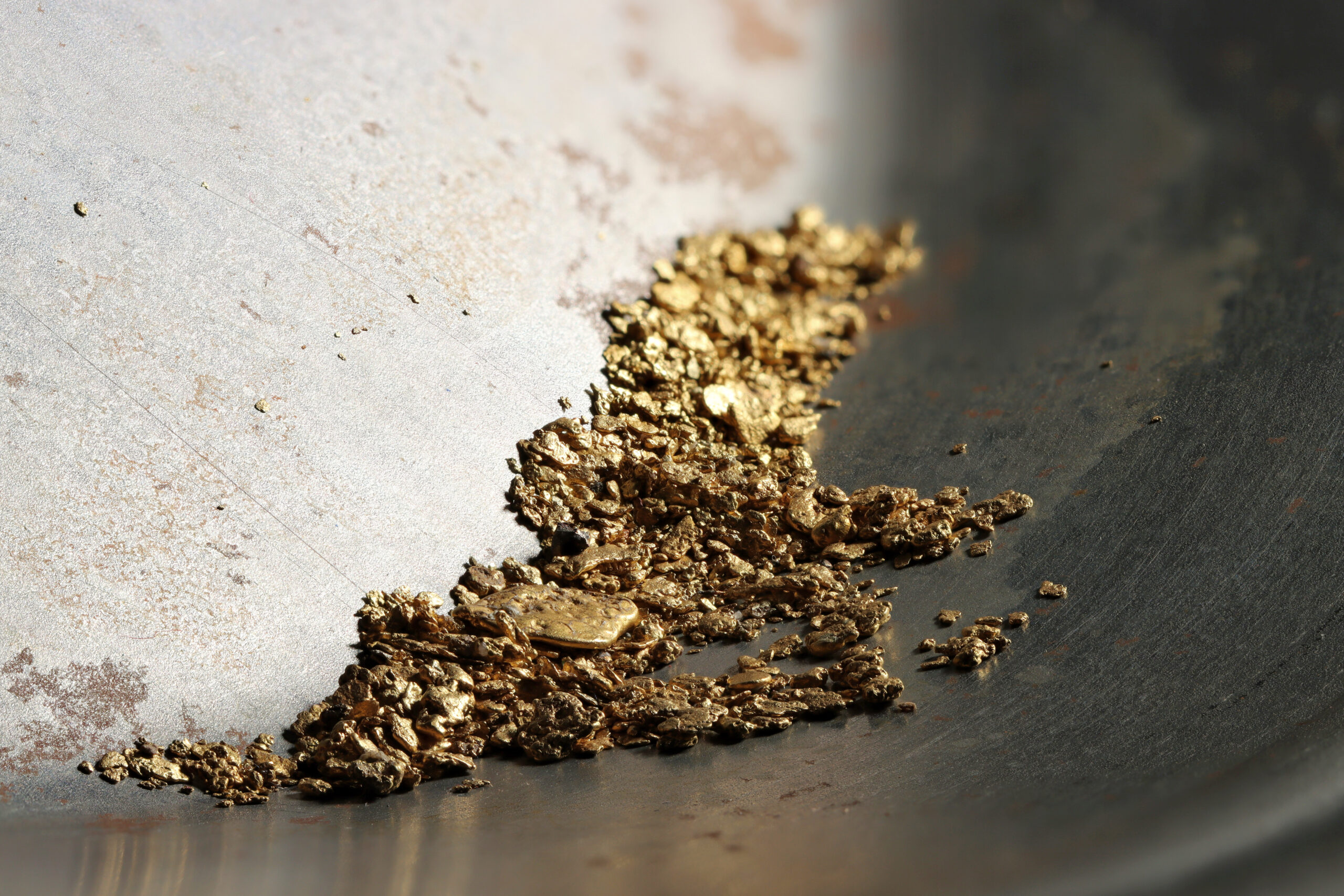
Few things capture the imagination like a raw gold nugget, a piece of solid gold just as nature formed it. Gold nuggets are prized by collectors, jewellers, investors and refiners alike. They are a direct link to the earth and to the long history of gold mining.
Buying raw gold nuggets takes knowledge, though. Purity varies from nugget to nugget, prices depend on more than weight, and fake nuggets are common in the market. This guide explains what gold nuggets are, where they come from, how they are priced and tested, and how to buy them safely. It also shows how Pearl Minerals International, a gold mining company based in Kampala, Uganda, supplies natural gold nuggets to buyers worldwide.
What Is a Raw Gold Nugget?
A gold nugget is a naturally occurring piece of native gold: gold found in its metallic form, rather than locked inside rock as tiny particles.
Nuggets form when gold is released from quartz veins and other rocks by weathering, then carried by water and deposited in streams, riverbeds and old river channels. Over thousands of years, water and gravel shape the gold into smooth, rounded or irregular pieces.
A raw nugget is sold as found: cleaned, but not melted or refined.
Gold Nuggets vs Gold Dust vs Gold Bars
| Type | Description |
|---|---|
| Gold nuggets | Larger natural pieces of gold, usually weighing from under a gram to many grams |
| Gold dust / flakes | Very small natural particles of gold |
| Doré bars | Gold melted and cast into bars at the mine, before refining |
| Refined bars | Purified gold of 99.5% or 99.99%, produced by refineries |
Where Do Gold Nuggets Come From?
Most gold nuggets come from alluvial (placer) deposits: sands and gravels in rivers, streams and ancient river beds. Some are also found in weathered soil close to gold-bearing rocks.
In Uganda, alluvial gold is found in several regions, including areas of Busia, Mubende, Buhweju, and parts of northern and western Uganda. Small-scale and mechanised alluvial mining operations recover nuggets by:
- excavating gold-bearing gravel
- washing it through sluices and screens
- recovering the heavy gold by gravity
- hand-picking larger nuggets from the concentrate
How Pure Are Raw Gold Nuggets?
Natural gold is never 100% pure. It almost always contains silver, plus small amounts of copper, iron and other metals. The purity of a nugget depends on where it was formed.
Typical natural gold nuggets range from about 70% to 95% gold, which is roughly 17 to 23 carats. Nuggets from the same area often have similar purity, but each one is slightly different.
This is why testing is essential. Two nuggets of the same weight can contain very different amounts of gold.
How Are Gold Nuggets Priced?
Gold nuggets are usually priced in one of two ways.
1. By Gold Content (Most Common)
Most nuggets bought for refining, investment or jewellery are valued on their fine gold content, as follows:
Value = weight × purity × gold price, less an agreed discount
Example (for illustration only):
- Nugget weight: 50 grams
- Purity (by assay): 90%
- Fine gold content: 45 grams
- At an example price of $128 per gram of pure gold: 45 × $128 = $5,760 before discount
The discount covers refining, assay, export, freight and insurance costs. Always check the live gold price when buying.
2. Specimen Value (Collector Nuggets)
Rare nuggets, such as large, unusually shaped or attractive pieces, or nuggets still attached to quartz, can sell above their gold value to collectors. Specimen value depends on:
- size and weight
- shape and natural beauty
- colour and surface texture
- rarity, and the nugget’s origin
- whether quartz or crystal formations are attached
Specimen nuggets should not be melted or destructively tested, because this destroys their collector value.
How to Test Gold Nuggets
X-Ray Fluorescence (XRF)
XRF is a fast, non-destructive test that measures the metal content at the surface of the nugget. It is ideal for specimen nuggets, and for quick checks before purchase.
Fire Assay
Fire assay is the most accurate method for measuring gold content. It requires taking a sample, or melting the gold, so it is used for nuggets sold for their gold value rather than as specimens.
Specific Gravity (Density) Test
Gold is extremely heavy. Pure gold has a density of about 19.3 g/cm³. Natural gold containing silver is somewhat lower, usually around 15.5–18.5 g/cm³. Weighing the nugget in air and then in water gives its density. This can quickly reveal fakes made from lighter metals, or rocks with gold coating.
Visual and Physical Checks
Genuine gold:
- does not rust or tarnish
- is not magnetic
- is soft enough to dent slightly
- keeps its colour when scratched
Visual checks alone are not enough to confirm that a nugget is genuine.
Beware of Fake Gold Nuggets
Fake nuggets are one of the most common tricks in the gold trade, especially in deals arranged quickly or online. Common fakes include:
- brass or copper alloys that look gold-coloured
- gold-plated lead or tungsten, which are made heavy to pass weight checks
- rocks or pyrite (“fool’s gold”) painted or coated to look like gold
- nuggets mixed with low-grade or fake pieces in a single lot
How to protect yourself:
- Insist on independent testing by a recognised laboratory.
- Use XRF and density tests for every nugget or lot.
- Ask for fire assay, or sample testing, for large purchases of non-specimen nuggets.
- Witness the testing yourself, or send a trusted representative.
- Buy only from licensed sellers with a real office and verifiable documents.
- Be very cautious with nuggets offered far below the market price.
Documentation for Gold Nugget Exports
Raw gold nuggets exported internationally need the same documentation as any other gold export:
- the seller’s company registration and mining or mineral dealer’s licence
- an independent assay or XRF report for the nuggets
- a certificate of origin
- an export permit for the shipment
- royalty payment receipts
- the customs export declaration
- the commercial invoice and packing list, listing each nugget or lot with its weight
- the airway bill and insurance certificate
For specimen nuggets, the seller should also provide photographs and a detailed description of each piece.
Tips for Buying Raw Gold Nuggets
- Decide your purpose. Are you buying for gold value, for jewellery, or as a collector? This affects how nuggets are priced and tested.
- Ask for photos and weights of individual nuggets before you buy.
- Understand the pricing basis. Is the price based on gold content, specimen value, or both?
- Start with a trial purchase to build trust with a new seller.
- Use secure payment, such as payment after independent testing, escrow, or a letter of credit.
- Check your country’s import rules for raw gold before shipping.
Raw Gold Nuggets from Pearl Minerals International
Pearl Minerals International is a gold mining and export company headquartered at Kingdom Kampala, Uganda. Our nuggets are recovered from our licensed mining operation at [MINE LOCATION], and supplied to collectors, jewellers, refiners and investors worldwide.
What We Offer
- Natural gold nuggets: typical purity [PURITY RANGE]
- Sizes: from [SMALLEST] to [LARGEST] grams
- Mixed nugget lots, for refining and investment
- Selected specimen nuggets for collectors, on request
- Minimum order: [QUANTITY]
How We Sell
- Tested: every nugget or lot is tested by [XRF / fire assay] at [LAB NAME].
- Witnessed: buyers may inspect and test nuggets in Kampala, or appoint their own assayer.
- Documented: a certificate of origin, export permit, assay report, royalty receipts and customs papers.
- Transparent pricing: based on fine gold content and the international gold price, with specimen pieces priced individually.
- Secure delivery: sealed, insured shipments from Entebbe International Airport.
We never ask buyers to pay upfront fees before the nuggets and their documents have been verified.
Enquire About Gold Nuggets for Sale
Contact us for photos, weights and a quotation for our current gold nuggets.
Pearl Minerals International
Kingdom Kampala, Kampala, Uganda
Phone / WhatsApp: (+243) 988 518 124
Email: info@pearlmineralsinternational.com
Tell us the quantity, the size range, and whether you’re buying for gold value or as a collector, and we’ll send you available nuggets with test results.