
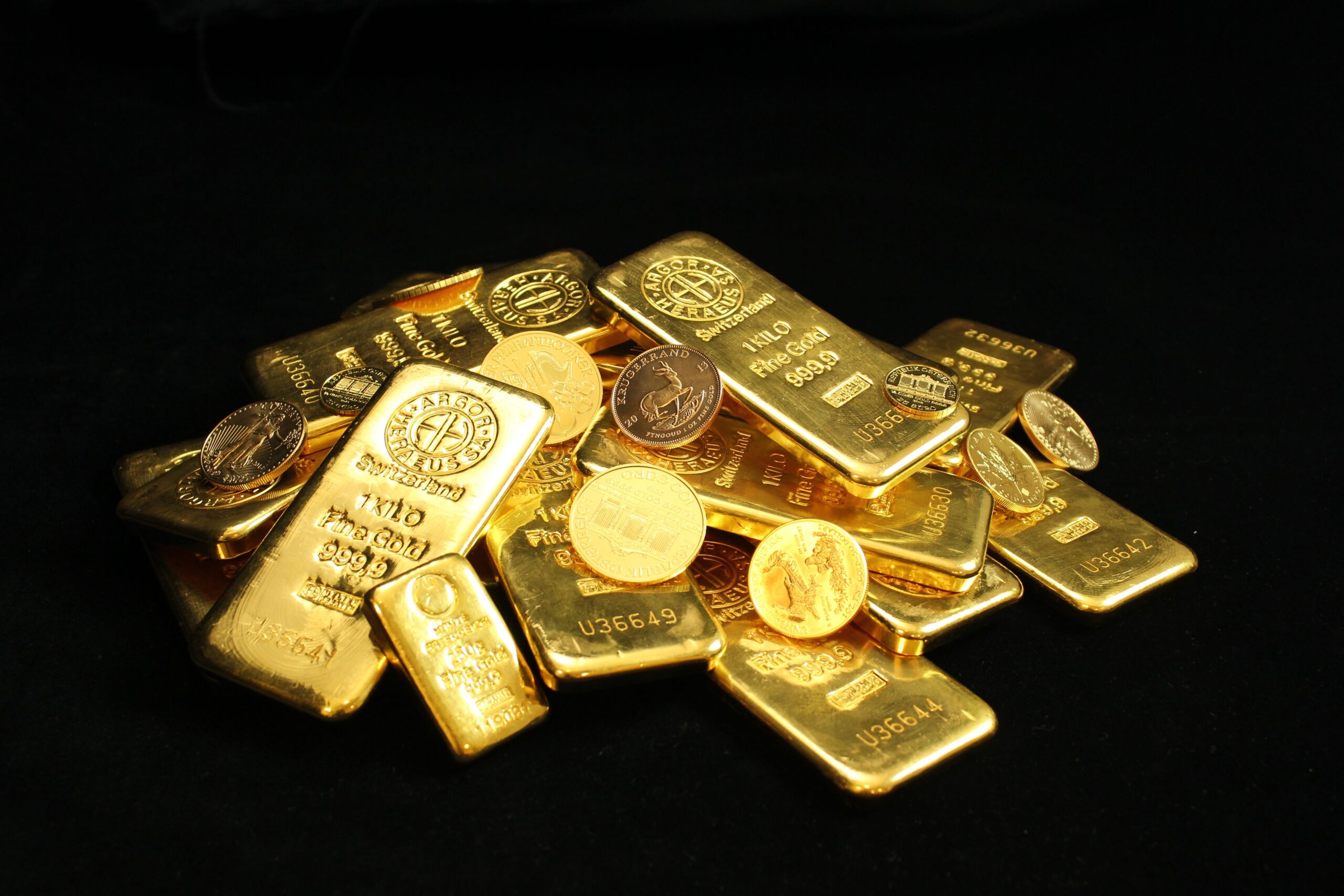
The internet has made it easier than ever to find gold for sale. With a few clicks, you can browse bullion dealers, contact mining companies on the other side of the world, and receive quotations by email or WhatsApp. It has also made it easier than ever for fraudsters to pretend to sell gold.
Every year, buyers lose large sums to fake gold websites, cloned company pages, intercepted emails and “sellers” who never had any gold at all. The good news is that buying gold online can be done safely, if you know which kind of purchase you are making and follow the right steps.
This guide explains the two main ways people buy gold online, the most common online risks, and a clear checklist for buying safely.
Two Very Different Ways to Buy Gold Online
1. Buying Refined Bullion from Established Dealers
This means buying refined gold coins and bars from well-known bullion dealers, banks or mints through their websites. The products are standard (for example, 1 oz coins or 1 kg bars of 99.99% gold), the prices are published, and the gold is delivered to you or stored in a vault.
Best for: individual investors and savers.
2. Buying Raw Gold from Producers and Exporters
This means buying doré bars, gold dust or nuggets in larger volumes from mining companies or licensed exporters, usually for refining, jewellery or trading.
Best for: refiners, bullion dealers, jewellers and professional traders.
In this kind of purchase, the internet is only the starting point. You can find sellers and make first contact online, but a safe purchase always moves offline for verification, inspection, testing, contracts and secure payment.
The most important rule: for raw gold from producers, never complete a purchase only online. If a seller wants the whole deal done by email or chat, with payment before any independent verification, treat it as a serious warning sign.
The Most Common Online Gold Scams
Fake Gold Websites
Fraudsters build professional-looking websites for companies that don’t exist. They often use stolen photos of gold bars and mines, fake certificates, and invented testimonials.
Cloned Company Websites
Scammers copy the name, logo and content of a real company onto a website with a slightly different address, for example adding a hyphen or changing “.com” to “.net”. They then pretend to be that company.
Email Interception (Payment Redirection)
Criminals hack or spoof email accounts, and send a message that appears to come from the seller, saying: “Our bank details have changed. Please pay into this new account.” The money goes to the criminals.
Social Media and Messaging App Offers
Unsolicited messages on WhatsApp, Facebook, LinkedIn or Telegram offering gold at large discounts are a common starting point for fraud.
Advance-Fee Scams
After you agree to buy, the “seller” asks you to pay for taxes, export permits, customs clearance, insurance, storage or “release fees” before delivery. The fees keep coming, and the gold never does.
Fake Documents
Scammers send scanned licences, assay reports, airway bills and customs certificates that look official, but are forged.
Fake Escrow or Shipping Companies
Some scams use fake “escrow agents”, “security companies” or “diplomatic couriers”, controlled by the fraudsters themselves.
Warning Signs to Watch For
Be very cautious if you see any of these:
- gold offered well below the international market price
- pressure to act quickly, before an “offer expires”
- requests for upfront fees before verified delivery
- payment requested to a personal account, or to an account in a third country
- requests to pay in cryptocurrency, gift cards or money transfer services
- no physical office, or an office you are told you cannot visit
- a refusal to allow independent testing
- contact details that don’t match the company’s registered country or address
- a website that is very new, or that uses free email addresses (such as Gmail or Yahoo) for business
- documents with spelling errors, mismatched names or unusual stamps
- sudden changes to bank details, contact people or delivery plans
The Safest Way to Buy Gold Online: Step-by-Step
Step 1: Verify the Website and Company
- Check the website address carefully, letter by letter.
- Check how old the domain is, using a public “WHOIS” lookup. Very new domains deserve extra caution.
- Check the company registration in the official business registry of its country. In Uganda, this is the URSB.
- Search the company name, together with words such as “scam”, “fraud” or “complaint”.
- Make sure the company’s name, address and phone number are the same everywhere: on the website, in emails, on documents and in official records.
Step 2: Verify Licences Independently
For raw gold sellers, ask for:
- the company registration number
- the mining or mineral dealer’s licence number
- confirmation that the company can obtain export permits
Then confirm these directly with the issuing authority, using contact details you find yourself. In Uganda, this is the Directorate of Geological Survey and Mines (DGSM).
Step 3: Talk to Real People
- Arrange a video call with the company’s management.
- Call the company’s office number, as listed in official records.
- Ask detailed questions about the mine, its production, its testing and its documents. Genuine sellers answer clearly.
Step 4: Move Offline for Verification
Before paying anything:
- visit the office and, if possible, the mine
- or appoint a trusted local representative or an independent inspection company
- witness the weighing, testing and packing of the gold
Step 5: Insist on Independent Testing
- Use a recognised, independent laboratory for fire assay or XRF testing.
- Allow yourself to appoint your own assayer, or use split samples.
- Make sure the assay report matches the gold, the packing list and the export documents.
Step 6: Sign a Proper Contract
Use a written sales and purchase agreement that covers:
- the price formula and purity basis
- the assay and dispute process
- the payment and delivery terms
- the documents to be provided
Have it reviewed by a lawyer.
Step 7: Use Safe Payment Methods
Safer:
- payment after the gold arrives and is assayed at your refinery
- a letter of credit through a reputable bank
- a genuine, independent escrow service that you have verified yourself
- small trial shipments before larger orders
Never:
- pay large sums upfront to an unverified seller
- pay “release”, “clearance” or “storage” fees to get gold delivered
- pay into personal accounts, or into accounts in unrelated countries
- pay with cryptocurrency, gift cards or untraceable transfer methods
Step 8: Protect Your Payment Details
- Confirm bank details by phone, using a number you know is genuine, before every payment.
- Never accept changes to bank details by email alone.
- Use secure, official company email addresses, and enable two-factor authentication on your own accounts.
Step 9: Track the Shipment Yourself
- Ask for the airway bill number, and track it directly with the airline or logistics company.
- Confirm the insurance cover with the insurer.
- Don’t rely only on tracking links sent by the seller.
Step 10: Start Small and Build Trust
Begin with a trial shipment. Once the first transaction is completed successfully, you can increase volumes with confidence.
Safe Online Buying Checklist
| ✓ | Check |
|---|---|
| ☐ | The website address and domain age have been checked |
| ☐ | The company registration has been verified with the official registry |
| ☐ | The licences have been confirmed with the mining authority |
| ☐ | The contact details match the official records |
| ☐ | A video call or in-person meeting has been held |
| ☐ | The office or mine has been visited, by you or your representative |
| ☐ | Independent assay has been arranged |
| ☐ | A written contract has been reviewed by a lawyer |
| ☐ | A secure payment method has been agreed |
| ☐ | The bank details have been confirmed by phone |
| ☐ | The shipment is being tracked directly with the carrier |
| ☐ | The first order is a trial shipment |
How Pearl Minerals International Keeps Online Buying Safe
Pearl Minerals International is a gold mining and export company headquartered at Kingdom Kampala, Uganda. Many of our buyers first find us online. We encourage every one of them to verify us thoroughly before doing business.
Our Commitments to Online Buyers
- Verifiable company: URSB Registration No. [NUMBER]. You can confirm it with the registry.
- Verifiable licences: Mining licence No. [NUMBER]. You can confirm it with DGSM.
- Official contact channels only: we communicate through info@pearlmineralsinternational.com and our listed phone number. We will never contact you from a free email address.
- Bank details never change by email: always confirm our payment details by phone before making any payment.
- Video calls and visits welcome: you can meet our team online, or visit our office at Kingdom Kampala.
- Independent assay: every lot is tested by [LAB NAME], and you may appoint your own assayer.
- Full documentation: a certificate of origin, export permit, royalty receipts and customs papers.
- Safe payment: [payment after assay / escrow / letter of credit].
- No upfront fees: we never ask buyers to pay for taxes, clearance, storage or “release” before the gold and its documents have been verified.
If you ever receive a message claiming to be from Pearl Minerals International that doesn’t match these details, don’t pay. Contact us directly through our official channels.
Contact Us Through Our Official Channels
Pearl Minerals International
Kingdom Kampala, Kampala, Uganda
Phone / WhatsApp: (+243) 988 518 124
Email: info@pearlmineralsinternational.com
Send us your enquiry, and we’ll arrange a video call and provide our company documents for your verification.